
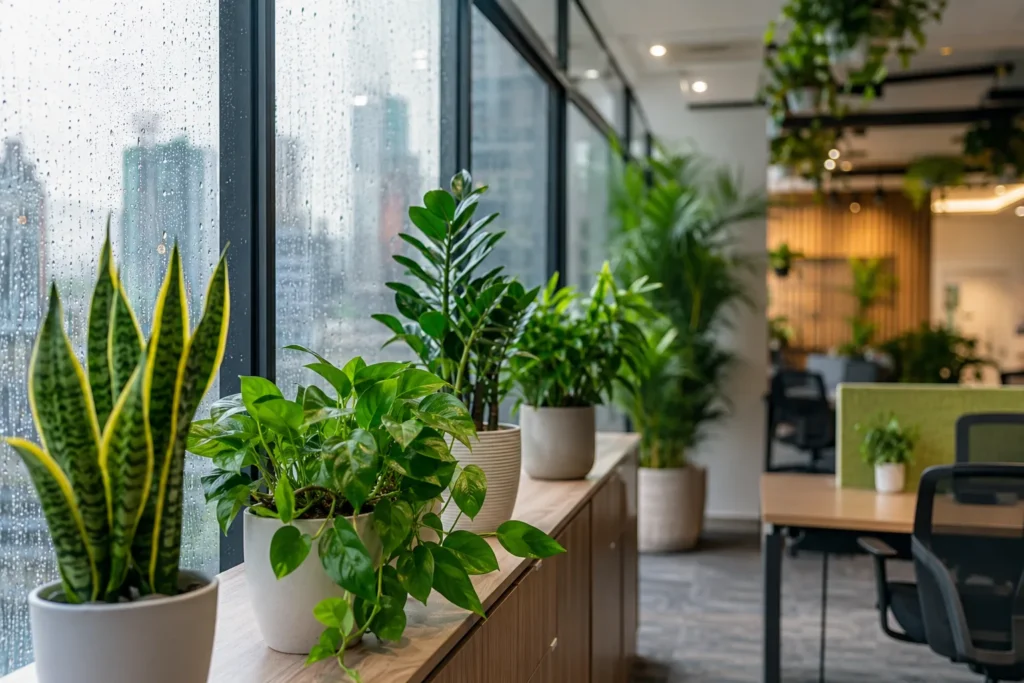
Office Plantscaping Services in Pune can make a workplace feel fresh, calm, and pleasant. But office plants need care, especially during the rainy season.
Rain brings cool air and high moisture. This sounds good for plants. But too much moisture can also cause root rot, fungus, bad smell, yellow leaves, and pests.
The good news is simple care can help your indoor plants stay healthy.
This guide explains easy rainy-season plant care tips for offices in Pune. It also covers plant selection, watering, light, soil, pest control, cleaning, and common plant problems.
What Is Office Plantscaping?
Office plantscaping means using plants in an office in a planned way.
It is more than just keeping a few pots on desks.
A good office plantscaping plan looks at:
- Office size
- Natural light
- Air flow
- AC use
- Plant type
- Pot size
- Water needs
- Employee areas
- Meeting rooms
- Reception areas
- Work desks
- Common spaces
The goal is simple: choose the right plant for the right place and give it the right care.
Why Does Rainy Season Matter for Office Plants?
Pune gets more humidity during the monsoon. Indoor spaces can also stay damp when windows are closed or air flow is low.
This can affect plants in many ways.
Too much water can stay in the soil for a long time. Roots may not get enough air. Fungus can also grow on wet soil and leaves.
Some plants may grow well in this weather. Others may need less water.
So, the rainy season is a good time to change the normal plant care routine.
Do Not Water Plants on a Fixed Schedule
One common mistake is watering every plant on the same day.
Plants do not all need the same amount of water.
Before watering, check the soil.
Put your finger into the top layer of soil. If the soil is still wet, wait.
If the top soil feels dry, the plant may need water.
During the rainy season, indoor plants may need less water than they need during hot and dry months.
Simple rule
Check the soil first. Water later.
This small habit can prevent overwatering.
Make Sure Pots Have Drainage Holes
Good drainage is very important during the monsoon.
A pot should have holes at the bottom. These holes help extra water leave the pot.
If water stays inside the pot, roots can become weak.
Always check:
- Drainage holes
- Pot tray
- Soil moisture
- Standing water
- Root health
Do not allow water to stay in the tray for many hours.
Use the Right Soil Mix
Indoor plants need soil that can drain well.
Heavy soil can hold too much water.
A good indoor plant soil mix should allow both water drainage and air movement around the roots.
Depending on the plant, a soil mix may include materials such as:
- Garden soil
- Cocopeat
- Compost
- Perlite
- Sand
- Other drainage materials
The exact mix depends on the plant.
For example, a snake plant needs very different watering conditions from a peace lily.
Keep Plants in the Right Light
Rainy days can reduce sunlight.
This can be a problem for indoor plants that need bright light.
Look around the office.
Find places with:
- Natural light
- Bright indirect light
- Good air movement
- No harsh direct sun
Do not keep every plant in a dark corner.
At the same time, do not place a shade-loving plant under strong direct sunlight.
Easy tip
Choose plants based on the light available in the office, not only on how they look.
Clean Plant Leaves
Dust can collect on indoor plant leaves.
During the rainy season, high humidity can make this problem worse.
Dirty leaves may not look healthy. Dust can also reduce the amount of light reaching the leaf surface.
Wipe large leaves gently with a clean, soft, damp cloth.
Do not use strong cleaning products on leaves.
Clean leaves can help plants look fresh and attractive.
Watch for Fungal Growth
High moisture can increase the risk of fungal problems.
Look for:
- White growth on soil
- Black spots on leaves
- Brown leaf patches
- Soft stems
- Bad smell
- Yellow leaves
- Sudden leaf drop
If you see these signs, check the plant’s water and air flow first.
Do not keep adding water to a plant that already has wet soil.
If the problem is serious, professional plant care may be useful.
Improve Air Flow
Plants need air.
An office with closed windows and low air movement can become humid.
Good air flow helps wet soil and leaves dry naturally.
But do not place plants directly under strong AC air.
Very cold or strong air can stress some plants.
Keep plants at a safe distance from AC vents and air outlets.
Keep Plants Away From Water Leaks
Check the office before placing plants.
Avoid areas near:
- Leaking windows
- Damp walls
- AC water leaks
- Wet floors
- Roof leaks
- Water pipes
A plant does not need a constantly wet environment.
Too much moisture can harm roots and encourage fungus.
Check Plants for Pests
Indoor plants can still get pests during the rainy season.
Check the leaves and stems once or twice a week.
Look for:
- Small insects
- Sticky leaves
- White insects
- Tiny webs
- Brown spots
- Curling leaves
Early action is easier than treating a large pest problem.
Remove badly damaged leaves when needed and keep affected plants away from healthy plants until the issue is checked.
Choose Plants That Suit the Office
Plant selection is one of the most important parts of office plantscaping.
Not every beautiful plant is a good office plant.
For indoor offices, commonly used plants include:
Snake Plant
Snake plants are popular because they can handle lower light and do not need frequent watering.
Money Plant
Money plants can work well in many indoor spaces when they get suitable light and water.
ZZ Plant
ZZ plants are often suitable for offices because they can handle lower light and periods of dry soil.
Peace Lily
Peace lilies can look beautiful in reception areas and workspaces. They need more attention to watering than some low-water plants.
Areca Palm
Areca palms can add a soft, green look to larger office areas. They need enough light and proper watering.
Rubber Plant
Rubber plants can work well in bright indoor areas with suitable indirect light.
The best plant depends on the office environment.
Office Plant Selection: A Simple Guide
| Office Area | What to Consider |
|---|---|
| Reception | Attractive, easy-care plants |
| Work desks | Small plants |
| Meeting room | Low-maintenance plants |
| Lobby | Large statement plants |
| Window area | Light-loving plants |
| Dark corner | Low-light plants |
| Pantry | Plants suited to the available light |
| Open workspace | Plants that do not need frequent care |
Do Not Overcrowd Plants
More plants do not always mean a better office.
Too many plants in one small area can reduce air movement.
It can also make cleaning and watering difficult.
Give each plant enough space.
Think about:
- Plant size
- Pot size
- Walking space
- Light
- Air flow
- Cleaning access
A clean and simple plant layout often looks better than a crowded one.
Check Indoor Plant Pots After Heavy Rain
Rain itself does not directly water most indoor plants.
But rain can change indoor humidity.
After heavy rain, check your office plants.
Look at the:
- Soil
- Leaves
- Pot
- Tray
- Drainage
- Nearby walls
- Window area
If a plant is near an open window, make sure rainwater is not entering the pot.
Reduce Watering When Needed
This is one of the most important monsoon tips.
Many people think plants need more water because it is rainy outside.
That is not always true.
Indoor plants may stay wet for longer because:
- The weather is humid
- There is less heat
- Sunlight may be lower
- Windows may stay closed
- Air movement may be lower
So, check the soil before every watering.
Fertilizer Should Be Used Carefully
Plants need nutrients to grow.
But fertilizer should not be used blindly.
A weak or stressed plant does not always need more fertilizer.
Follow the needs of the plant.
Too much fertilizer can damage roots and cause leaf problems.
If you are not sure, ask a plant care professional before applying fertilizer.
Remove Dead Leaves
Dead leaves can make an office look untidy.
They can also hide pest or fungal problems.
Check plants regularly and remove:
- Dead leaves
- Yellow leaves
- Broken leaves
- Dry stems
Use clean tools when cutting plants.
This also makes it easier to notice new problems.
Common Rainy Season Indoor Plant Problems
Yellow Leaves
Yellow leaves can happen because of:
- Too much water
- Poor drainage
- Low light
- Old leaves
- Root problems
Do not assume every yellow leaf means the plant needs more water.
Brown Leaf Tips
Brown tips may happen because of:
- Dry soil
- Low humidity
- Too much fertilizer
- Water quality
- Heat or AC stress
Check the plant’s full environment before taking action.
Soft or Rotten Roots
This can be a sign of too much water.
Remove the plant carefully and check the roots if the problem is serious.
Healthy roots are generally firm. Rotten roots may be soft and dark.
White Growth on Soil
White growth may appear when soil stays wet for too long.
Improve drainage and air flow.
Avoid keeping the soil constantly wet.
How Often Should Office Plants Be Checked?
A simple weekly check can help.
During the monsoon, check:
Leaves: Look for spots, pests, and damage.
Soil: Check if it is wet or dry.
Pots: Check drainage.
Trays: Remove standing water.
Location: Make sure the plant gets suitable light.
Air flow: Keep plants away from harmful AC airflow.
For larger offices, a regular plant maintenance plan can make care easier.
What Is Office Plant Maintenance?
Office plant maintenance means regular care of plants after they are placed in the workplace.
It may include:
- Watering
- Leaf cleaning
- Pruning
- Fertilizing
- Pest checks
- Soil checks
- Plant replacement
- Pot cleaning
- Plant health checks
This is useful for offices where employees do not have time to care for plants every day.
Why Professional Office Plantscaping Can Help
A professional plantscaping team can first study the office space.
They can look at:
- Light levels
- Office size
- Plant locations
- Indoor temperature
- AC use
- Humidity
- Plant types
- Maintenance needs
Then they can suggest plants that match the space.
This can help reduce common problems such as overwatering, poor plant placement, and unsuitable plant selection.
The goal should not be to add the maximum number of plants.
The goal should be to create a healthy and easy-to-maintain green space.
Office Plantscaping Services in Pune: What Should You Check?
If you are looking for Office Plantscaping Services in Pune, ask these simple questions before choosing a service provider:
- Do they check the office light?
- Do they suggest plants based on the space?
- Do they provide regular maintenance?
- Do they check for pests?
- Do they manage watering?
- Do they replace unhealthy plants?
- Do they clean leaves?
- Do they understand indoor plant care?
- Do they provide suitable pots?
- Do they offer a maintenance plan?
These questions can help you choose a service that focuses on plant health, not just plant placement.
Simple Monsoon Plant Care Checklist
Use this quick check every week:
- Check soil before watering
- Remove standing water
- Check pot drainage
- Clean dusty leaves
- Check for pests
- Look for fungus
- Remove dead leaves
- Check plant light
- Check AC exposure
- Check for water leaks
- Clean plant trays
- Check new plant growth
Frequently Asked Questions
Snake plants, ZZ plants, money plants, rubber plants, peace lilies, and areca palms can be suitable for offices, depending on light and care conditions.
How often should office plants be watered during the rainy season?
There is no fixed number of days for every plant. Check the soil first. If it is still wet, wait before watering.
Which plants are good for offices in Pune?
Can too much rain harm indoor plants?
Yes. Rain increases outdoor humidity, and indoor spaces may stay damp. If soil remains wet for too long, roots can become unhealthy.
Should office plants be kept near windows during monsoon?
It depends on the plant. Some need bright light, while others prefer indirect light. Avoid placing plants where strong rainwater or harsh sunlight can reach them.
How can I stop fungus on indoor plant soil?
Avoid overwatering, improve drainage, and allow the soil to dry as needed for the plant. Better air flow can also help.
Are indoor plants difficult to maintain?
Not always. Choosing low-maintenance plants and giving them the right light, water, and pot can make plant care much easier.
Is professional plant maintenance needed for an office?
It can be helpful for larger offices or workplaces where employees do not have time to care for plants regularly.
Final Thoughts
Rainy weather can be good for plants, but indoor plants still need the right care.
The most important rule is simple:
Do not water a plant just because it is raining outside. Check the plant first.
Give plants the right light. Use pots with good drainage. Keep leaves clean. Watch for pests and fungus. Keep plants away from leaks and strong AC air.
A healthy office plant setup does not need to be complicated.
Good plant selection + good placement + simple regular care can keep an office green and fresh throughout the year.
If you are planning Office Plantscaping Services in Pune, focus first on the needs of your office and plants. A good plantscaping plan should be practical, easy to maintain, and suitable for the local climate.
Looking for Office Plantscaping Services in Pune?
If you want to make your office greener but are not sure which plants, pots, or care plan will work best, Interioforest can help you understand the right approach for your workplace.
From plant selection and placement to regular plant care, the focus should always be on creating a healthy and easy-to-maintain office environment.
Want to plan a greener office? Contact Interioforest today and discuss your office space, plant needs, and maintenance requirements. Get the right plant plan for your workplace instead of choosing plants at random.