
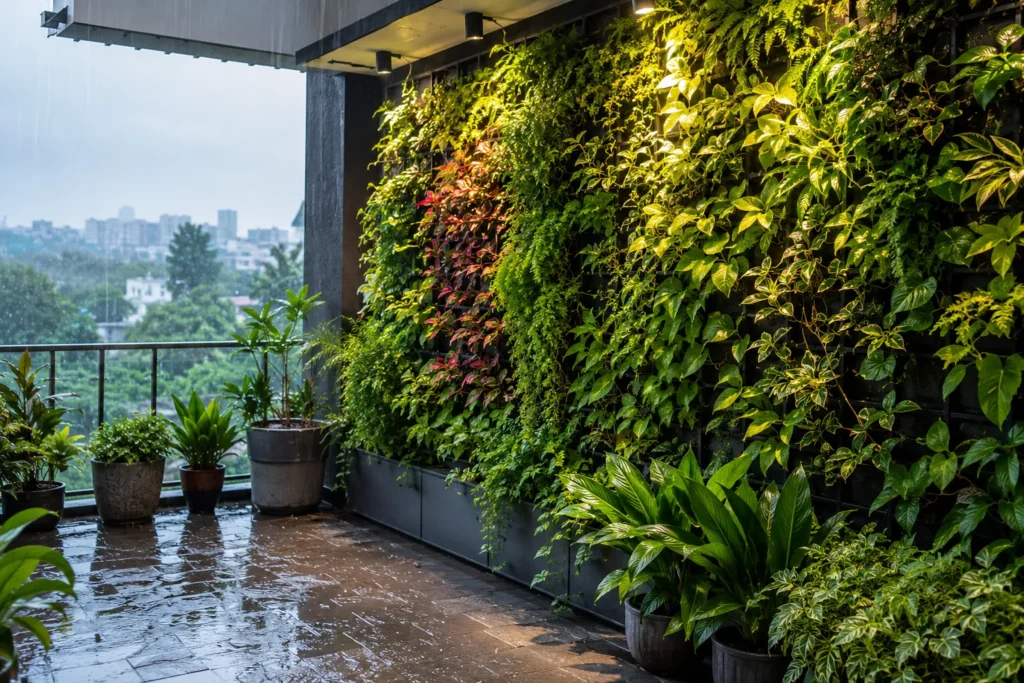
A vertical garden can make a home, office, balcony, or building look fresh and green. In a busy city like Pune, many people have less open space. A vertical garden is a smart way to grow plants without using much floor space.
But the rainy season can bring some problems.
Heavy rain, too much water, poor drainage, fungus, and weak plant roots can damage a green wall. This is why proper care is important.
This simple guide explains how to take care of a vertical garden during the rainy season. It is useful for homes, offices, cafes, apartments, and commercial spaces in Pune.
Quick Answer:
To keep a vertical garden healthy during the Pune rainy season, check drainage, avoid too much watering, remove damaged leaves, control fungus, and choose plants that can handle moisture and humidity.
What Is a Vertical Garden?
A vertical garden is a garden that grows upward instead of spreading across the ground.
Plants can grow on:
- A wall
- A metal frame
- A wooden structure
- Modular panels
- Hanging pockets
- Trellis systems
- Balcony walls
It is also called a:
- Green wall
- Living wall
- Vertical green space
- Wall garden
A well-planned Vertical Garden Design in Pune can help people add more greenery to small spaces.
Why Are Vertical Gardens Popular in Pune?
Pune has many apartments, offices, cafes, commercial buildings, and modern homes. Many properties have limited open garden space.
A vertical garden can help use an empty wall.
It can be added to:
- Home balconies
- Terrace areas
- Office walls
- Reception spaces
- Cafes
- Restaurants
- Schools
- Hospitals
- Apartment common areas
The main idea is simple.
Less floor space. More green space.
But a beautiful vertical garden needs the right design and regular care.
Why Does Rainy Season Care Matter for Vertical Gardens?
Rain is good for plants. But too much rain is not always good.
During the monsoon season, plants may face:
- Too much water
- Wet roots
- Fungal growth
- Leaf spots
- Root rot
- Pest problems
- Water leakage
- Weak plant growth
A vertical garden has many plants placed close together. If one part has poor drainage, water can stay inside the system.
This can create problems.
That is why rainy season care should start before the heavy rain begins.
1. Check the Drainage System First
Drainage is one of the most important parts of a vertical garden.
Water should not stay around the roots for too long.
When water stays inside the growing media, roots may not get enough air. This can cause root damage.
Check these things:
- Are the drainage holes open?
- Is water flowing out properly?
- Is any water collecting behind the wall?
- Are planters holding too much water?
- Is there a water outlet?
A good Vertical Garden Design in Pune should include proper drainage from the beginning.
Do not wait until the rainy season to check this.
Simple tip:
After a heavy rain, look at the wall.
If water is staying inside one area for a long time, that area may need attention.
2. Do Not Give Extra Water Without Checking
Many people continue their normal watering routine during the rainy season.
This can be a mistake.
If plants are already getting rainwater, extra watering may make the roots too wet.
Before watering, touch the growing media.
If it is already wet, wait.
Follow this simple rule:
Wet soil = Do not add more water.
Dry soil = Check if watering is needed.
Automatic irrigation systems should also be checked during the monsoon.
You may need to reduce the watering schedule.
Every garden is different. The right amount of water depends on:
- Rainfall
- Plant type
- Wall location
- Sunlight
- Drainage
- Growing media
3. Choose Plants That Can Handle the Local Climate
Plant selection is very important.
Not every plant will grow well in every place.
Some walls get:
- Heavy rain
- Strong sunlight
- Low sunlight
- High humidity
- Strong wind
Before choosing plants, understand the location.
For example, a covered office wall and an open balcony wall will need different plant choices.
Common types of plants used in vertical gardens may include:
- Ferns
- Philodendron varieties
- Money plants
- Spider plants
- Syngonium
- Peace lilies
- Dracaena
- Certain local and climate-friendly plants
The best plant choice depends on the exact site.
A good vertical garden is not only about choosing pretty plants.
It is about choosing the right plant for the right place.
4. Remove Yellow and Damaged Leaves
The rainy season can make plants grow fast. But it can also increase leaf damage.
Check the garden every few days.
Remove:
- Yellow leaves
- Dead leaves
- Broken stems
- Diseased leaves
- Leaves with strong fungal spots
Why is this important?
Dead plant material can hold moisture. It can also support fungal growth.
Removing damaged leaves helps improve:
- Air movement
- Plant appearance
- Garden hygiene
- Overall plant health
Always use clean gardening tools.
5. Watch for Fungal Problems
High moisture and humidity can increase fungal growth.
Look for signs like:
- Black spots
- Brown spots
- White growth
- Soft stems
- Rotting leaves
- Bad smell near roots
Do not ignore these signs.
If a problem spreads, more plants may get affected.
What can help?
- Remove damaged leaves
- Improve airflow
- Reduce extra watering
- Check drainage
- Keep the garden clean
- Use plant treatment when needed
For a large green wall, it is better to get help from a trained garden maintenance team if the problem keeps spreading.
6. Improve Airflow Around the Plants
Plants need space and airflow.
When plants grow too close together, moisture may stay trapped between leaves.
This can increase the risk of fungus.
Check for:
- Overgrown branches
- Thick plant clusters
- Leaves blocking air movement
Light pruning can help.
Do not cut too much at one time.
Remove only the parts that are:
- Dead
- Damaged
- Diseased
- Overcrowded
Good airflow helps plants dry naturally after rain.
7. Protect the Wall Behind the Garden
A vertical garden should not damage the building wall.
Before installation, the wall should be checked properly.
Important points include:
- Waterproofing
- Drainage
- Support structure
- Water flow
- Access for maintenance
Too much moisture behind the garden can create problems over time.
A planned Vertical Garden Design in Pune should consider both the plants and the building structure.
A green wall should look good, but it should also be safe and practical.
8. Check the Garden After Heavy Rain
Heavy rain can change the condition of the garden very quickly.
After strong rainfall, check:
The plants
Look for broken leaves and stems.
The drainage
Make sure water is moving out.
The structure
Check if any panel or support has become loose.
The wall
Look for unusual water marks or leakage.
The soil or growing media
Make sure it is not staying too wet for too long.
A quick check after heavy rain can help find problems early.
9. Keep an Eye on Pests
The rainy season can also bring more pest activity.
Common signs may include:
- Holes in leaves
- Sticky leaves
- Small insects
- Curled leaves
- Weak new growth
Do not spray random chemicals immediately.
First, identify the problem.
Different pests need different solutions.
Regular checking is better than waiting until the damage becomes serious.
For home gardens, safe and suitable plant care methods should be chosen carefully.
10. Keep the Growing Media Light and Well Drained
Plants need a good growing base.
The growing media should support the roots but should not stay waterlogged for a long time.
A good system should balance:
- Water
- Air
- Nutrients
- Root support
Heavy and compact media may hold too much water.
Over time, this can affect root health.
If plants are repeatedly dying in the same area, check the growing media and drainage system.
The problem may not always be the plant.
11. Do Not Add Too Much Fertilizer During Heavy Rain
Plants need nutrients. But more fertilizer does not always mean better growth.
During heavy rain:
- Nutrients may wash away
- Roots may already be stressed
- Over-fertilising may damage plants
Follow a proper plant nutrition schedule.
The right plan depends on:
- Plant type
- Growth stage
- Growing media
- Weather
- Garden system
If you are unsure, avoid adding large amounts of fertilizer without understanding what the plants need.
12. Clean the Vertical Garden Area
A clean garden is easier to maintain.
Remove:
- Fallen leaves
- Dead plants
- Plastic waste
- Blocked material
- Old damaged parts
Also check the floor below the green wall.
Rainwater may carry leaves and dirt into drainage areas.
If the drainage outlet gets blocked, water can collect.
A simple cleaning routine can prevent bigger problems.
Common Rainy Season Problems in Vertical Gardens
Here are some common problems and simple reasons behind them.
Problem: Leaves Are Turning Yellow
Possible reasons:
- Too much water
- Poor drainage
- Root stress
- Low nutrients
- Disease
Check the roots and growing media before making changes.
Problem: Plants Are Dying From the Bottom
Possible reasons:
- Water staying near roots
- Poor airflow
- Fungal growth
- Old or damaged plant roots
Remove dead parts and inspect the system.
Problem: Water Is Dripping From the Wrong Area
Possible reasons:
- Blocked drainage
- Broken pipe
- Poor water flow
- Loose irrigation connection
This should be checked early to avoid wall damage.
Problem: Fungus Is Spreading
Possible reasons:
- High humidity
- Wet leaves
- Poor airflow
- Too much watering
Remove affected plant parts and improve the growing conditions.
How Often Should You Check a Vertical Garden During Monsoon?
A small garden can be checked every few days.
A large vertical garden may need regular professional maintenance.
A simple routine can include:
Daily or regular checks
- Look for damaged plants
- Check unusual water flow
Weekly checks
- Remove dead leaves
- Check drainage
- Look for pests
- Inspect plant growth
Monthly checks
- Review the full irrigation system
- Check plant health
- Check the structure
- Review nutrient needs
Regular care is easier than repairing a damaged garden later.
Best Places for a Vertical Garden
A vertical garden can work in many spaces.
Home Balcony
A green wall can make a small balcony feel fresh.
Office
Plants can improve the look of reception and common areas.
Cafe or Restaurant
A natural green wall can create a pleasant visual space.
Apartment
Common walls can become attractive green areas.
Terrace
A vertical system can add greenery without using too much walking space.
The design should always match the location.
How to Plan a Vertical Garden Before Installation
Before starting, ask these simple questions:
1. How much sunlight does the wall get?
Some plants need more light. Some prefer shade.
2. Is the wall covered from rain?
Open and covered spaces need different planning.
3. Where will the water go?
Drainage should be planned before installation.
4. Who will maintain the garden?
A beautiful garden still needs regular care.
5. What is the purpose?
Is the garden for:
- Beauty?
- Privacy?
- A better office look?
- A small home garden?
- A commercial space?
Clear planning can help avoid future problems.
Vertical Garden Design in Pune: Things to Consider
When planning a Vertical Garden Design in Pune, local weather and the property layout are important.
Consider:
- Rain exposure
- Summer heat
- Sunlight direction
- Wall condition
- Water supply
- Drainage
- Plant selection
- Maintenance access
A design that looks beautiful in a photo may not always work well at every location.
The best green wall is one that is easy to maintain and suitable for the real environment.
Frequently Asked Questions
Is a vertical garden good for the rainy season?
Yes. A vertical garden can grow well during the rainy season if drainage and plant care are managed properly.
Should I water my vertical garden when it is raining?
Check the moisture first. If the growing media is already wet, extra watering may not be needed.
Can heavy rain damage a green wall?
Yes. Heavy rain can cause waterlogging, fungal growth, broken plants, and drainage problems if the system is not designed properly.
Which plants are good for vertical gardens in Pune?
The best plants depend on sunlight, rain exposure, humidity, and the exact location. Plant selection should match the site conditions.
How often does a vertical garden need maintenance?
Basic checking may be needed every few days or weekly. Larger gardens may need a regular maintenance plan.
Can a vertical garden cause wall leakage?
Poor drainage and poor waterproofing can increase the risk of moisture problems. Proper installation is important.
Final Thoughts
A vertical garden can turn an empty wall into a living green space.
But good design is only the first step.
During the rainy season, plants need extra attention.
The most important things to remember are simple:
- Do not let water stay near the roots
- Check drainage
- Avoid overwatering
- Remove dead leaves
- Watch for fungus
- Check plants after heavy rain
- Choose the right plants
- Keep the garden clean
A well-planned Vertical Garden Design in Pune can stay healthy and attractive when the design, plant selection, drainage, and maintenance work together.
The goal is not just to create a green wall.
The goal is to create a green wall that can grow well for a long time.
Need Help Planning a Healthy Vertical Garden?
If you are planning a vertical garden for your home, office, balcony, terrace, cafe, or commercial space, proper planning can save time and reduce future maintenance problems.
Interioforest can help you explore practical Vertical Garden Design in Pune based on your available space, sunlight, wall condition, and maintenance needs.
Looking for a smart, healthy, and easy-to-maintain vertical garden? Contact Interioforest today to discuss your space and find the right green wall solution for your property.