
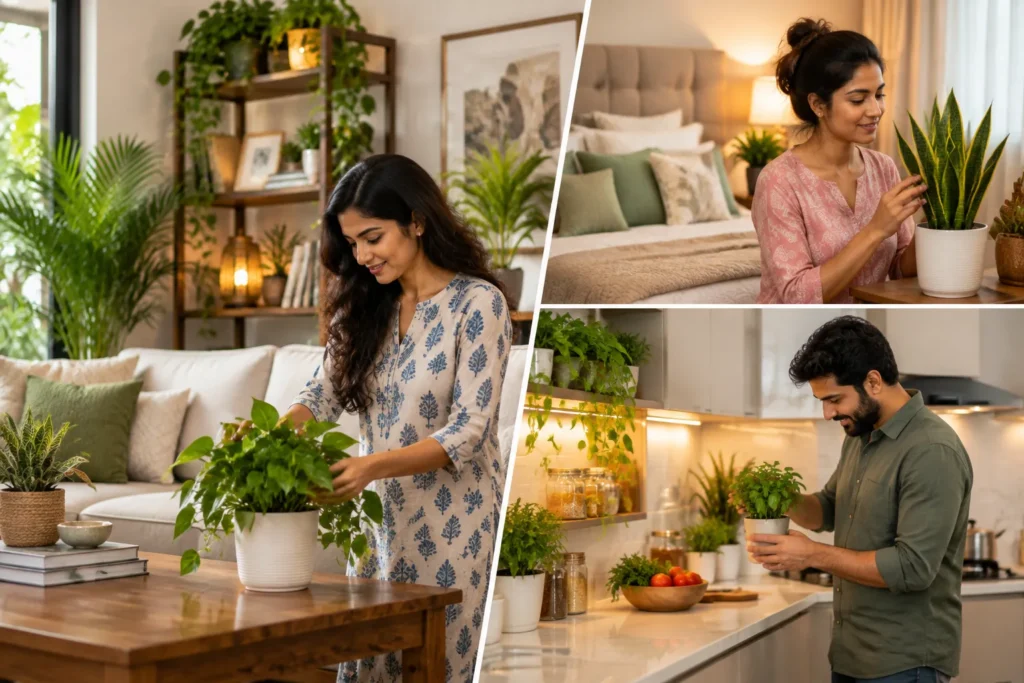
Choosing the right Indoor Plants for Home is not only about how a plant looks. Each room has different light, space, heat, and air needs. A plant that grows well in a bright living room may not grow well in a dark bedroom. The kitchen may also need plants that can handle heat and changes in air and moisture. The good news is that you do not need to be a plant expert to make a good choice. You only need to check the light, room size, plant care, and space available. This guide explains how to choose plants for bedrooms, living rooms, and kitchens, how to care for them, common mistakes to avoid, and when Home Plantscaping Services in Pune can help.
How to Choose Indoor Plants for Home
The best indoor plant depends on four simple things:
- How much sunlight the room gets
- How much space you have
- How often you can care for the plant
- The heat and moisture in the room
Before buying a plant, look at the place where you want to keep it. Check it for one full day. See when sunlight comes in and how strong it is.
A plant for a bright window may be very different from a plant for a dark corner.
Check the Light First
Light is one of the most important things for indoor plants.
You can think of indoor light in three simple ways:
Bright light: The room gets strong light for many hours. Some plants can also get gentle morning sun.
Medium light: The room is bright, but the plant is not close to direct sun.
Low light: The room gets little natural light. Choose plants that can handle less light.
Low light does not mean no light. Most plants still need some light to stay healthy.
Check the Room Space
Small rooms need small plants. Large rooms can use bigger floor plants.
For a small bedroom, you can use a small plant on a table or shelf. For a large living room, a tall plant can fill an empty corner.
Do not place too many plants in one small area. Plants need space for healthy growth and easy care.
Best Indoor Plants for Home Bedrooms
Bedrooms often have less light than living rooms. They may also have limited floor space. So, choose plants that fit the room and its light.
Some indoor plant choices for bedrooms include:
- Snake plant
- ZZ plant
- Pothos
- Spider plant
- Peace lily
Before choosing any plant, check if its light and care needs match your room.
Snake Plant for Bedrooms
Snake plants have upright leaves and take up little floor space. They can work well in rooms where a simple plant design is wanted.
Place the plant where it gets suitable natural light. Avoid keeping it in a place where it may be knocked over.
Pothos for Small Spaces
Pothos can grow as a hanging or trailing plant. This makes it useful when floor space is limited.
You can place it on a shelf, high table, or plant stand, as long as the location has enough light.
Peace Lily
Peace lilies have green leaves and white flowers. They can add a soft look to a bedroom.
They need suitable light and regular care. If the room is very dark, another plant may be a better choice.
Important: Some indoor plants can be harmful if eaten by pets or children. Always check plant safety before bringing a plant into your home.
Best Indoor Plants for Home Living Rooms
The living room often has more space and light than other rooms. This gives you more plant choices.
You can use:
- Tall floor plants
- Small table plants
- Hanging plants
- Plants on shelves
- Plants near windows
Tall Plants for Empty Corners
A tall indoor plant can make an empty corner look full and fresh.
The plant should not block doors, windows, fans, or walking paths. Leave enough space around it for cleaning and watering.
Small Plants for Tables and Shelves
Small plants work well on side tables, shelves, TV units, and plant stands.
Use a few plants instead of filling every surface. This keeps the room clean and easy to use.
Plants Near Windows
Plants placed near windows can get more natural light. But strong direct sunlight may be too much for some plants.
Check the plant’s light needs before placing it right next to a sunny window.
Best Indoor Plants for Home Kitchens
Kitchens can be warm and may have changes in moisture. They can also have less open space.
Choose plants based on the kitchen’s light and available space.
Small herbs can work well in a bright kitchen if you can give them the right care. Other indoor plants can be placed on shelves or near windows.
Keep plants away from:
- Hot cooking areas
- Gas burners
- Very hot appliances
- Places where water or oil can splash
- Busy work areas
A plant should never make cooking or cleaning harder.
Indoor Plant Care: Simple Rules to Follow
Good plant care does not have to be hard.
Do Not Give Too Much Water
One common mistake is watering a plant too often.
Before watering, check the soil. If the soil is still wet, the plant may not need more water.
Different plants need different amounts of water.
Use Pots With Drainage Holes
A pot with drainage holes lets extra water leave the pot.
If water stays in the soil for too long, plant roots can become damaged. Use a suitable pot and soil for the plant.
Clean the Leaves
Dust can build up on indoor plant leaves. Gently clean the leaves when needed.
Clean leaves can also make the plant look neat and well cared for.
Remove Dead Leaves
Remove dry or dead leaves when needed. This helps keep the plant area clean.
Turn the Plant When Needed
If a plant gets light mainly from one side, turning the pot from time to time can help the plant grow more evenly.
How to Match Plants With Different Rooms
A simple room-by-room plan can make plant selection easier.
| Room | What to Check | Plant Type to Consider |
|---|---|---|
| Bedroom | Light and small space | Compact, easy-care plants |
| Living room | Space and light | Floor, table, or hanging plants |
| Kitchen | Heat, light, and space | Small plants or suitable herbs |
| Hallway | Often low light | Low-light tolerant plants |
| Balcony | Strong outdoor light | Plants suited to outdoor conditions |
Always check the care needs of the exact plant before buying it.
How Many Indoor Plants Should You Have?
There is no fixed number of plants that every home needs.
The right number depends on:
- Room size
- Available light
- Free space
- Time for plant care
- Personal style
A few healthy plants are better than many plants that do not get proper care.
Think about balance. One large plant can be enough for a corner, while a shelf may need two or three small plants.
Common Mistakes When Choosing Indoor Plants
Choosing a Plant Only for Its Looks
A beautiful plant may not be right for your room.
First check its light, water, and space needs.
Putting Low-Light Plants in Complete Darkness
A low-light plant still needs some light. Do not assume that any plant can live in a dark room.
Watering Every Plant the Same Way
Different plants have different water needs. Check the soil and plant care guide.
Keeping Plants Near Heat
Do not keep plants close to heaters, cooking flames, or very hot appliances.
Buying Too Many Plants at Once
Start with a few plants. Learn how to care for them. Then add more when you understand your home’s light and space.
How Home Plantscaping Can Improve Your Space
Home plantscaping means planning and placing plants as part of the home’s overall space.
It is more than simply putting pots around a room. A good plan looks at:
- Room layout
- Natural light
- Plant size
- Pot size
- Plant placement
- Easy access for care
- Overall room look
If you have a large home or want a planned green space, Home Plantscaping Services in Pune can help you plan plant placement based on the space and its needs.
Professional planning can be useful when you want plants to fit well with the room instead of choosing them one by one without a plan.
How to Plan Indoor Plants for Home Step by Step
Follow these simple steps:
Step 1: Check the room.
Look at light, space, heat, and air flow.
Step 2: Choose the plant type.
Pick plants that match the room conditions.
Step 3: Choose the right spot.
Keep plants where they can get the light they need without causing problems.
Step 4: Choose the right pot.
Make sure the pot is suitable for the plant and has good drainage.
Step 5: Make a care plan.
Know when to check the soil, water the plant, and clean the leaves.
Step 6: Watch the plant.
Yellow leaves, dry soil, weak growth, or drooping leaves can be signs that the plant needs a change in care.
When Should You Get Professional Plantscaping Help?
You may consider professional help if:
- You have many rooms to plan
- You want a complete indoor green setup
- You are not sure which plants suit your light
- You have limited space
- You want plants to match your home design
- You do not have much time for plant care
A plantscaping professional can help you think about the whole space instead of choosing plants separately.
Frequently Asked Questions
Which are the best Indoor Plants for Home?
There is no single best plant for every home. The right choice depends on light, room size, temperature, space, and the amount of care you can give.
Which plants are good for a bedroom?
Snake plant, ZZ plant, pothos, spider plant, and peace lily are common indoor choices. Always check the plant’s light and care needs before choosing one.
Which indoor plants are good for a living room?
Living rooms can use both small and large plants. Tall floor plants work well in empty corners, while small plants can be used on shelves and tables.
Can I keep plants in the kitchen?
Yes. Choose plants that suit the kitchen’s light and space. Keep them away from flames, hot appliances, oil splashes, and busy work areas.
How often should indoor plants be watered?
There is no single watering schedule for every plant. Check the soil and follow the care needs of the plant. Overwatering can cause problems.
Do indoor plants need sunlight?
Most indoor plants need some light. The amount depends on the plant. Some need bright light, while others can grow with less light.
What is home plantscaping?
Home plantscaping is the planned use of plants in a home. It considers plant choice, room layout, light, space, pots, and plant placement.
Can Home Plantscaping Services in Pune help choose plants?
Yes. A professional plantscaping service can help plan plant choices and placement based on the home’s space, light, and design needs.
Final Thought
Choosing Indoor Plants for Home becomes much easier when you start with the room instead of the plant. Check the light, space, heat, and care needs first. Then choose plants that can grow well in those conditions. Bedrooms may need compact plants, living rooms can use larger floor plants, and kitchens need plants that suit their light and heat.
If you want a planned green look across different rooms, Home Plantscaping Services in Pune can help you plan the space and choose suitable plant options. Start with a few healthy plants, give them the right care, and build your indoor green space step by step.