
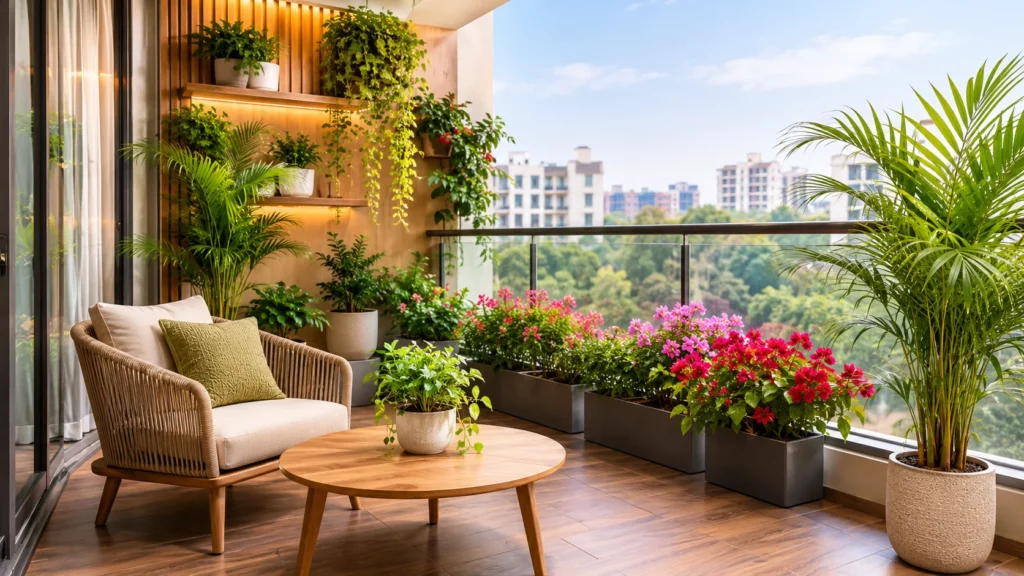
A well-designed balcony can become one of the most inviting spaces in your home. Choosing the best plants for home balcony gardens depends on sunlight exposure, available space, seasonal weather, watering requirements and your preferred design style. In Koregaon Park, Pune, homeowners can create beautiful green spaces using flowering plants, ornamental foliage, vertical gardens, aromatic herbs and statement palms. With thoughtful plant selection and professional planning, even a compact apartment balcony can become a relaxing outdoor retreat.
What Are the Best Plants for a Home Balcony in Pune?
The best balcony plants are those that can adapt to the balcony’s actual growing conditions rather than simply looking attractive at a nursery. For Pune homes, a combination of sun-tolerant flowering plants, tropical foliage, aromatic herbs and compact ornamental plants can create an attractive and manageable garden.
Here are some recommended plants for different balcony environments.
1. Areca Palm – For a Tropical Luxury Look
Areca Palm (Dypsis lutescens) is an attractive choice for homeowners who want a tropical atmosphere. Its graceful, arching fronds add height and movement, making it suitable for balcony corners and seating areas.
- Light: Bright, indirect light or gentle morning sunlight.
- Watering: Water when the upper soil begins to dry.
- Best placement: Sheltered balcony corners and partially shaded areas.
- Design benefit: Creates a natural green screen and adds vertical interest.
For a luxury balcony garden design, use Areca Palms in tall, neutral-coloured planters on either side of a seating area.
2. Bougainvillea – For Colourful, Sunny Balconies
Bougainvillea (Bougainvillea species and hybrids) is particularly suitable for bright, sunny balconies. Its colourful bracts create a vibrant display and can be trained along a trellis or balcony railing.
- Light: Full sunlight, preferably several hours daily.
- Watering: Allow the growing medium to dry partially between watering.
- Best placement: Sunny, open balconies.
- Design benefit: Adds colour, height and a climbing garden effect.
Bougainvillea is a useful option for west-facing balconies in Pune, provided the planter has good drainage and the plant is established gradually in its sunny position.
3. Snake Plant – For Low-Maintenance Greenery
Snake Plant (Dracaena trifasciata, formerly Sansevieria trifasciata) is a popular choice for people who prefer structured foliage and relatively simple plant care.
Its upright leaves make it particularly useful in contemporary homes where space is limited.
- Light: Bright indirect light; tolerates lower-light conditions.
- Watering: Water after the growing medium has dried.
- Best placement: Sheltered balconies and bright indoor corners.
- Design benefit: Creates a clean, architectural appearance.
It is important to avoid constantly wet soil, as excessive moisture can cause root and leaf problems.
4. Hibiscus – For Beautiful Flowering Displays
Hibiscus (Hibiscus rosa-sinensis) is a colourful flowering plant that works well in balconies receiving adequate direct sunlight.
Its large flowers can become the focal point of a balcony garden, especially when combined with green foliage plants.
- Light: Around 5–6 hours of direct sunlight is a useful starting target.
- Watering: Maintain reasonably consistent moisture without waterlogging.
- Best placement: Sunny balcony areas.
- Design benefit: Adds vibrant seasonal and recurring floral interest.
Choose a compact variety if you have limited floor space, and provide enough room for its roots and branches.
5. Money Plant – For Vertical Greenery
Money Plant (Epipremnum aureum), commonly called Pothos, is an excellent option for adding trailing foliage to balcony arrangements.
It can grow in hanging containers, elevated shelves and suitable vertical garden systems.
- Light: Bright, indirect light; tolerates lower light.
- Watering: Water when the upper layer of the growing medium dries.
- Best placement: Sheltered balconies and shaded vertical garden sections.
- Design benefit: Creates cascading greenery and softens hard architectural lines.
For a premium appearance, allow the vines to trail from coordinated wall-mounted planters or decorative hanging containers.
6. Spider Plant – For Hanging and Compact Gardens
Spider Plant (Chlorophytum comosum) is a practical choice for apartment balconies. Its arching leaves and small plantlets create a soft, layered appearance.
- Light: Bright indirect light or partial shade.
- Watering: Water when the surface begins to dry.
- Best placement: Hanging planters and shaded balcony shelves.
- Design benefit: Adds texture without occupying much floor space.
It is particularly useful for combining with taller foliage plants in a multi-level balcony arrangement.
7. Jasmine – For Fragrance and Natural Beauty
Jasmine (Jasminum sambac) is an appealing choice for homeowners who want fragrance alongside decorative greenery.
Its white flowers and attractive foliage can create a pleasant atmosphere near a balcony seating area.
- Light: Bright light and several hours of sunlight, depending on the variety.
- Watering: Water according to soil moisture and seasonal conditions.
- Best placement: Bright balconies and suitable trellises.
- Design benefit: Introduces fragrance and a traditional garden character.
Choose a suitable compact variety and provide support if the plant is being trained as a climber.
8. Rubber Plant – For Contemporary Balcony Styling
Rubber Plant (Ficus elastica) is valued for its large, glossy leaves and strong visual presence. It works particularly well in contemporary interiors and sheltered balcony spaces.
- Light: Bright, indirect light.
- Watering: Allow the upper soil to dry before watering again.
- Best placement: Covered balconies with filtered sunlight.
- Design benefit: Provides a bold focal point with minimal decorative accessories.
Avoid placing a nursery-grown indoor specimen immediately in harsh afternoon sunlight. Gradual acclimatisation is important.
9. Portulaca – For Hot and Sunny Balconies
Portulaca (Portulaca grandiflora) is a useful flowering plant for sunny balconies. Its colourful blooms and relatively low water requirements make it suitable for smaller containers.
- Light: Full sunlight.
- Watering: Water moderately, allowing the growing medium to drain.
- Best placement: Sunny railings and shallow containers.
- Design benefit: Adds colourful ground-level coverage.
It is particularly useful for filling spaces between larger ornamental plants.
10. Aloe Vera – For a Simple, Sculptural Garden
Aloe Vera (Aloe vera) is a succulent that stores water in its fleshy leaves. Its distinctive form works well in minimalist balcony arrangements.
- Light: Bright light and gradual exposure to sunlight.
- Watering: Water thoroughly but infrequently, allowing the soil to dry.
- Best placement: Bright, sunny and well-drained balcony areas.
- Design benefit: Adds sculptural foliage and a contemporary appearance.
Avoid placing Aloe Vera in containers that retain excess water, particularly during the monsoon.
Quick Comparison: Which Balcony Plants Should You Choose?
| Plant | Light requirement | Maintenance | Ideal application |
|---|---|---|---|
| Areca Palm | Indirect/filtered | Moderate | Tropical styling |
| Bougainvillea | Full sun | Low–moderate | Flowering screens |
| Snake Plant | Low to bright indirect | Low | Minimalist corners |
| Hibiscus | Full sun | Moderate | Flowering focal point |
| Money Plant | Indirect | Low | Vertical gardens |
| Spider Plant | Indirect/partial shade | Low | Hanging planters |
| Jasmine | Bright light/sun | Moderate | Fragrant corners |
| Rubber Plant | Bright indirect | Moderate | Statement greenery |
| Portulaca | Full sun | Low | Colourful planters |
| Aloe Vera | Bright light/sun | Low | Succulent arrangements |
Maintenance levels are relative recommendations, not guarantees. Actual requirements depend on plant variety, pot size, exposure, soil and season.
How Does Pune’s Climate Affect Balcony Plant Selection?
Pune’s seasonal weather makes it possible to grow a wide range of ornamental plants, but the changing temperature and rainfall require careful selection and placement.
According to the India Meteorological Department (IMD), Pune’s historical monthly climate normals show mean maximum temperatures reaching approximately 36–38°C during March and April. Rainfall increases substantially during the monsoon, particularly from June to September. These conditions make heat tolerance, water management and drainage important considerations for balcony gardening. IMD Pune+1
Summer: March to May
Summer balconies, particularly west-facing ones, can become very hot.
Recommended plants include:
- Bougainvillea
- Portulaca
- Aloe Vera
- Hibiscus
- Suitable heat-tolerant succulents
Design tip: Use larger planters, suitable mulch and carefully positioned shade structures to reduce rapid moisture loss. Check the soil more frequently during hot and windy periods.
Monsoon: June to September
Pune receives a significant share of its annual rainfall during the monsoon. Containers may remain wet for longer, increasing the risk of root problems.
Recommended plants for sheltered and well-drained spaces include:
- Money Plant
- Spider Plant
- Areca Palm
- Selected ferns
- Suitable tropical foliage plants
Design tip: Keep drainage holes clear, raise planters slightly above the floor and avoid allowing water to collect underneath containers.
Winter: October to February
The cooler and generally drier months provide opportunities to refresh flowering arrangements and maintain ornamental foliage.
Suitable choices include:
- Jasmine
- Hibiscus
- Petunia (seasonal)
- Marigold (seasonal)
- Spider Plant
- Succulents
Design tip: Introduce seasonal flowering plants to refresh the balcony without replacing its permanent greenery.
Which Plants Are Best for Different Balcony Directions?
Balcony orientation determines how much direct sunlight reaches your plants and at what time of day. Two balconies in the same apartment building can require completely different plant selections.
| Balcony orientation | Typical conditions | Suitable plant choices |
|---|---|---|
| East-facing | Gentle morning sunlight | Hibiscus, Jasmine, Areca Palm |
| West-facing | Strong afternoon sunlight | Bougainvillea, Portulaca, Aloe Vera |
| North-facing | Often shaded or indirect light | Snake Plant, Money Plant, Spider Plant |
| South-facing | Potentially strong and prolonged sunlight | Bougainvillea, Hibiscus, suitable succulents |
These are starting recommendations rather than fixed rules. Nearby buildings, balcony overhangs, trees, glass panels and seasonal sun angles can change the actual light conditions.
How to Check Your Balcony’s Sunlight
Before purchasing plants, observe your balcony at different times of the day.
- Check the balcony in the morning, afternoon and evening.
- Record when direct sunlight reaches the floor and walls.
- Identify areas receiving filtered light or permanent shade.
- Observe whether strong wind reaches the balcony.
- Group plants according to their light and watering requirements.
A simple sunlight assessment can prevent one of the most common balcony gardening mistakes: choosing attractive plants that cannot survive in the available conditions.
Luxury Balcony Garden Design Ideas for Homes in Koregaon Park
A luxury balcony garden is not simply a collection of expensive plants. It is a thoughtfully designed combination of greenery, planters, textures, lighting, furniture and functional space.
For premium apartments and residences in Koregaon Park, the design should complement the architecture and interior styling of the home while remaining practical to maintain.
Here are six balcony landscaping ideas worth considering.
Tropical Balcony Garden
A tropical balcony garden uses large foliage plants, layered greenery and natural materials to create a relaxing atmosphere.
Recommended elements:
- Areca Palms for vertical greenery.
- Monstera for dramatic leaf shapes in sheltered areas.
- Money Plants for cascading foliage.
- Natural wood or stone-finish planters.
- Comfortable outdoor seating.
Best for: Large balconies, luxury apartments and homeowners who prefer a lush garden appearance.
Minimalist Balcony Garden
Minimalist balcony landscaping focuses on clean lines, carefully selected plants and uncluttered arrangements.
Instead of filling every available space, choose a few statement plants and complement them with coordinated planters.
Recommended elements:
- Snake Plants.
- Rubber Plants.
- Compact succulents.
- Neutral-coloured ceramic or fibre planters.
- Minimal outdoor furniture.
Best for: Modern apartments, compact balconies and contemporary interiors.
Vertical Balcony Garden
A vertical garden uses walls and vertical structures to introduce greenery without occupying the entire floor area.
It is especially useful for apartment balconies where floor space is limited.
Recommended elements:
- Money Plant.
- Philodendron varieties.
- Spider Plant.
- Suitable ferns.
- Modular vertical planting systems.
Important installation considerations:
- Select a suitable wall or support structure.
- Check the wall’s ability to support the intended system.
- Provide reliable irrigation and drainage.
- Prevent water seepage into adjoining walls.
- Ensure maintenance access for pruning and plant replacement.
A living wall may require a dedicated irrigation arrangement, depending on its size and construction.
Flowering Balcony Garden
If you enjoy seasonal colour, a flowering balcony garden can create a welcoming outdoor environment.
Recommended plants:
- Bougainvillea.
- Hibiscus.
- Jasmine.
- Petunia.
- Marigold.
- Portulaca.
Combine flowering plants with evergreen foliage to maintain visual interest even when some varieties are not in bloom.
Balcony Garden with a Relaxation Corner
A relaxation-focused balcony combines comfortable seating with carefully arranged greenery.
The idea is to create a space where residents can read, enjoy morning tea or unwind after work.
Recommended elements:
- One or two statement foliage plants.
- Hanging planters.
- A compact outdoor chair.
- Weather-resistant flooring.
- Warm, appropriately rated outdoor lighting.
- Small aromatic plants.
Keep the main walking route clear and avoid placing heavy containers where they may obstruct access.
Balcony Herb Garden
A herb garden combines visual appeal with everyday functionality.
For homeowners who enjoy cooking, fresh herbs can be grown in railing planters, compact containers or vertical shelves.
Recommended herbs:
- Tulsi.
- Mint.
- Coriander.
- Basil.
- Curry Leaves.
- Lemongrass.
- Rosemary.
Most culinary herbs benefit from adequate light and well-drained growing media. Mint spreads quickly, so growing it in a separate container helps control its growth.
How to Choose Indoor and Outdoor Balcony Plants?
Not every plant sold as an indoor plant is suitable for outdoor balcony conditions. Similarly, plants that thrive in direct sunlight may struggle when placed inside a shaded living space.
The right selection depends on light intensity, exposure, airflow and the amount of protection provided by the balcony.
Best Indoor and Sheltered Balcony Plants
Consider these plants for covered balconies or areas receiving filtered sunlight:
- Snake Plant.
- Money Plant.
- Aglaonema.
- Spider Plant.
- Peace Lily.
- Philodendron.
- Rubber Plant.
These varieties have different light and moisture requirements. For example, Peace Lily generally prefers more consistent moisture than Snake Plant.
Best Outdoor Balcony Plants
For exposed balconies with adequate sunlight, consider:
- Bougainvillea.
- Hibiscus.
- Portulaca.
- Aloe Vera.
- Jasmine.
- Selected ornamental grasses.
- Sun-tolerant succulents.
Indoor vs Outdoor Plant Comparison
| Factor | Indoor/sheltered plants | Outdoor/exposed plants |
|---|---|---|
| Sunlight | Mostly indirect or filtered | Direct or filtered, depending on species |
| Wind exposure | Generally lower | Can be considerably higher |
| Watering | Depends on indoor temperature and light | Often more frequent in hot weather |
| Suitable plants | Pothos, Aglaonema, Snake Plant | Bougainvillea, Hibiscus, Portulaca |
| Main challenge | Insufficient natural light | Heat, wind and rapid drying |
Professional recommendation: Create separate planting zones instead of mixing every plant together. This makes irrigation, maintenance and long-term plant health easier to manage.
How to Design a Small Balcony Garden Without Making It Look Crowded
A small balcony does not need dozens of plants to look beautiful. A well-planned arrangement of different plant heights, textures and container sizes can create a premium appearance without compromising usable space.
Consider these practical balcony garden design ideas.
Use Vertical Space
Wall-mounted planters, hanging baskets and vertical gardening systems help maximise available space.
Place trailing plants at higher levels and compact plants at lower levels to create a layered appearance.
Select Multi-Level Planters
Tiered plant stands allow you to display different varieties in a limited footprint.
Use taller plants at the back and smaller decorative plants towards the front.
Create a Focal Point
Choose one visually distinctive plant, such as an Areca Palm or Rubber Plant, as the main focal point.
Arrange smaller plants around it rather than distributing attention equally across every corner.
Use Coordinated Planters
A consistent colour palette can make a balcony feel more organised.
Consider:
- Matte white planters.
- Charcoal or grey containers.
- Natural stone finishes.
- Wood-textured planters.
- Neutral ceramic pots.
Keep the Seating Area Functional
Avoid allowing plant stands and containers to block access to doors, windows or seating.
A balcony garden should enhance the usable area rather than turn it into an overcrowded storage space.
What Should You Consider Before Installing a Balcony Garden?
A successful balcony garden requires more than selecting attractive plants. The installation must account for drainage, structural safety, container weight, waterproofing and maintenance access.
These considerations are particularly important in apartments and high-rise residential buildings.
Balcony Load Capacity
Large planters, wet growing media, decorative stones and water reservoirs can add considerable weight.
Before installing large containers, raised garden beds or extensive vertical garden systems, consult the building’s structural engineer or an appropriately qualified professional about the balcony’s permissible loading.
Do not assume that a balcony can support an unlimited number of heavy planters.
Drainage and Waterproofing
Excess water is one of the most common causes of balcony garden problems.
Every container should have suitable drainage unless it is specifically designed as a self-watering system with an appropriate reservoir.
Consider:
- Drainage holes in pots.
- Raised planter stands.
- Suitable waterproofing protection.
- Controlled irrigation.
- Proper disposal of excess water.
Avoid allowing water to flow onto neighbouring balconies or building façades.
Wind Exposure
High-rise balconies can experience strong and unpredictable wind.
Tall plants, lightweight containers and hanging baskets may become unstable.
Use appropriately sized, stable containers, secure approved hanging systems and position taller plants away from exposed edges.
Soil and Growing Media
Garden soil taken directly from the ground is not always suitable for container gardening because it can become compacted and restrict root aeration.
A suitable container-growing medium should balance:
- Water retention.
- Drainage.
- Root aeration.
- Nutrient availability.
- Structural stability.
The ideal growing medium depends on the plant species and container type.
Plant Safety for Children and Pets
Some popular ornamental plants can cause irritation or poisoning if chewed or ingested.
For example, Pothos, Peace Lily and Snake Plant should not be assumed to be pet-safe.
If you have children or pets, check the botanical identity and toxicity information of every proposed plant before installation. Position potentially harmful varieties out of reach or choose verified safer alternatives.
Irrigation and Maintenance Access
A balcony garden should be designed around the time you can realistically spend caring for it.
For larger arrangements, drip irrigation or self-watering planters may help manage water distribution.
However, automated irrigation still requires inspection for blocked emitters, leaks and drainage issues.
Technical reference: RHS container gardening guidance and Oregon State University Extension container gardening recommendations. RHS Advice+2
How Much Maintenance Does a Balcony Garden Require?
The maintenance requirements of a balcony garden depend on plant species, sunlight, container size, growing medium and seasonal weather.
A low-maintenance garden still requires occasional watering, pruning, pest monitoring and nutrient management.
Here is a practical maintenance schedule.
| Frequency | Recommended activity |
|---|---|
| Daily during hot weather | Check soil moisture and signs of wilting |
| Weekly | Inspect leaves, stems and containers for pests |
| Weekly or as needed | Remove dead leaves and spent flowers |
| Monthly or as required | Check plant growth and nutrient requirements |
| Seasonally | Refresh flowering plants and adjust watering |
| Periodically | Check drainage, roots and container condition |
Common Balcony Gardening Problems and Solutions
| Common problem | Likely cause | Practical solution |
|---|---|---|
| Yellowing leaves | Overwatering, poor drainage or nutrient issues | Check soil moisture and root condition |
| Brown leaf edges | Heat, dry air or inconsistent watering | Review exposure and watering |
| Weak, stretched growth | Insufficient light | Move to a brighter suitable position |
| Root rot | Waterlogged growing medium | Improve drainage and remove damaged roots |
| Fewer flowers | Inadequate sunlight or unsuitable care | Check light and species requirements |
| Pest infestation | Stressed plants or pest introduction | Isolate affected plants and treat appropriately |
Important: Avoid following a fixed watering calendar for every plant. Check the growing medium first and adjust according to actual conditions.
For additional container care guidance, see the Royal Horticultural Society’s container gardening guide.
How Much Does Luxury Balcony Garden Design Cost in Pune?
The cost of a balcony garden in Pune depends on the size of the space, number and maturity of plants, planter materials, vertical gardening requirements and installation complexity.
There is no single price that applies to every balcony.
Main Factors Affecting Balcony Landscaping Costs
| Component | What influences the cost |
|---|---|
| Plants | Species, size, quantity and availability |
| Planters | Material, dimensions, finish and design |
| Vertical garden | Frame, planting modules and irrigation |
| Flooring | Decking, artificial turf or other finishes |
| Irrigation | Manual watering or automated systems |
| Lighting | Outdoor-rated fixtures and installation |
| Maintenance | Frequency of visits and gardening requirements |
How to Plan Your Balcony Garden Budget
A practical approach is to divide the project into three priorities:
Essential requirements
- Suitable plants.
- Appropriate planters.
- Growing medium.
- Drainage arrangements.
Design enhancements
- Vertical planters.
- Decorative containers.
- Plant stands.
- Privacy greenery.
Premium additions
- Custom living walls.
- Integrated irrigation.
- Outdoor seating.
- Suitable landscape lighting.
- Specialised decorative finishes.
This approach allows homeowners to develop their balcony garden according to their preferred design and available budget.
Why Choose Professional Plantscaping Services for a Balcony Garden in Koregaon Park?
Professional plantscaping combines horticultural knowledge with spatial planning and landscape aesthetics. Instead of purchasing plants individually and arranging them randomly, a planned installation considers the entire balcony as one integrated green space.
For homeowners in Koregaon Park, professional planning can be particularly useful when working with premium apartments, limited floor areas or customised balcony layouts.
A professionally planned balcony garden may include:
- Space assessment: Understanding the balcony dimensions, available sunlight, ventilation and intended use.
- Plant selection: Selecting varieties suited to the location and maintenance requirements.
- Design planning: Arranging plants according to height, texture, colour and available space.
- Planter selection: Matching container dimensions and materials to the overall design.
- Installation: Positioning plants, planters and approved supporting structures.
- Maintenance planning: Establishing suitable watering, pruning and plant-care routines.
Home Plantscaping Services by Interioforest
Interioforest provides plantscaping solutions in Pune, including home plantscaping, balcony gardens, vertical gardens, living walls and indoor and outdoor landscaping.
Its home plantscaping service page specifically identifies Koregaon Park as one of its service areas.
For homeowners considering a complete balcony transformation, Interioforest can be approached to discuss plant selection, greenery arrangements and suitable garden design requirements.
Explore Home Plantscaping Services in Koregaon Park, Pune to learn more about its residential plantscaping solutions.
You can also enquire about Balcony Garden Setup in Koregaon Park, Pune through Interioforest’s website.
Company service information: Interioforest’s published home plantscaping and company profile pages. Interioforest+1
How to Create a Long-Lasting Luxury Balcony Garden
A visually attractive installation should also be practical to maintain over time.
The following approach helps create a balcony garden that remains functional and visually balanced.
Step 1: Define the purpose
Decide whether the balcony will be used for relaxation, entertaining guests, growing herbs or displaying ornamental plants.
Step 2: Assess environmental conditions
Understand the sunlight, wind exposure, rainwater flow and available drainage.
Step 3: Select compatible plants
Group plants with similar light and moisture requirements to simplify maintenance.
Step 4: Plan the layout
Create a balance between tall plants, medium-sized foliage, flowering varieties and trailing greenery.
Step 5: Select appropriate containers
Use containers that provide sufficient root space, drainage and stability.
Step 6: Install and monitor
After installation, observe how plants respond to their new environment. Adjust placement and watering where necessary.
Step 7: Maintain the design
Prune plants, replace seasonal flowers, check irrigation and keep the planters clean.
A well-planned balcony garden should evolve naturally as plants grow rather than require a complete redesign every few months.
Transform Your Koregaon Park Balcony into a Green Living Space with Interioforest
A balcony can become much more than an extension of your living room. With the right combination of plants, planters and landscaping elements, it can become a comfortable green retreat within your home.
Whether you prefer a tropical balcony garden, a minimalist arrangement, a flowering garden or a customised vertical green wall, the first step is understanding your space and selecting plants that suit its growing conditions.
Interioforest offers home plantscaping and balcony garden solutions in Pune, including Koregaon Park.
Ready to transform your space? Contact us today for a consultation, and let us bring nature to your doorstep.
Interioforest
Plantscaping Solutions | Pune
Contact Information
+91 74101 34405
contactus@interioforest.com
Green Groves, Baif Road, Wagholi, Pune – 412207
WhatsAppInstagramFacebookLinkedIn
Get Directions to Interioforest Office
Frequently Asked Questions (FAQs)
1. Which are the best plants for a home balcony in Pune?
Areca Palm, Bougainvillea, Hibiscus, Jasmine, Snake Plant, Money Plant and Aloe Vera are useful choices for Pune balconies. The right selection depends on sunlight, wind exposure and watering requirements. Choose flowering plants for sunny spaces and foliage plants for sheltered or partially shaded balconies.
2. Which balcony plants require less maintenance?
Snake Plant, Aloe Vera, Bougainvillea, Portulaca and certain succulents are relatively low-maintenance options. They generally require less frequent watering once established. However, their growing conditions still matter, and all container plants need periodic inspection, pruning and appropriate nutrients.
3. Which plants are suitable for a west-facing balcony in Pune?
West-facing balconies often receive strong afternoon sunlight and can become hot during summer. Bougainvillea, Portulaca, Hibiscus and Aloe Vera are suitable options when properly established. Use well-drained containers and monitor soil moisture to prevent excessive drying.
4. How can I create a luxury balcony garden in a small apartment?
Use vertical planters, coordinated containers, layered greenery and one or two statement plants. Keep the central floor area open for movement or seating. A combination of trailing plants, compact foliage and selected flowering varieties can create a premium appearance without overcrowding the balcony.
5. Can I grow flowering plants on an apartment balcony?
Yes. Bougainvillea, Hibiscus, Jasmine, Portulaca and seasonal flowering plants such as Petunia can be grown in suitable balcony containers. Most flowering varieties need adequate sunlight, appropriate growing media and regular removal of spent flowers to maintain healthy growth.
6. How often should balcony plants be watered in Pune?
There is no universal watering schedule. During summer, exposed balcony containers may dry quickly and require more frequent checks. During the monsoon, watering should generally be reduced according to rainfall and soil moisture. Always check the growing medium before watering.
7. Do balcony gardens require professional installation?
Not every balcony garden requires professional installation. A few small pots can be arranged independently. However, professional plantscaping is useful for larger projects involving vertical gardens, customised planters, irrigation, heavy containers or integrated landscaping designs.
8. Does Interioforest provide home plantscaping services in Koregaon Park, Pune?
Yes. Koregaon Park is listed as a service area on Interioforest’s home plantscaping page. Homeowners can enquire about residential greenery arrangements, indoor landscaping and customised plantscaping requirements through its website or by calling +91 74101 34405.