
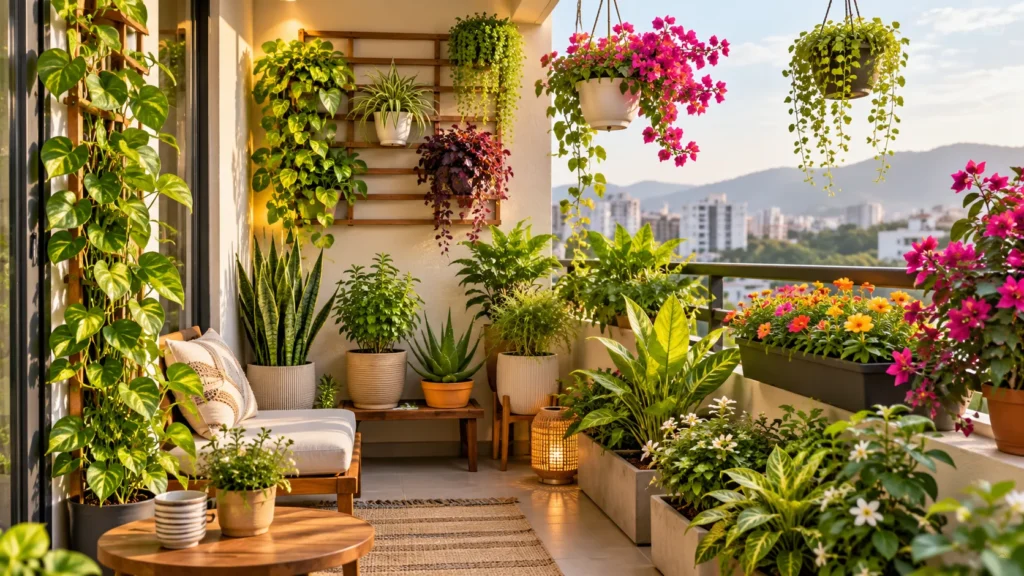
A small garden does not need a large space to look beautiful. With the right plants, thoughtful arrangements and simple maintenance, even a compact balcony, terrace, courtyard or outdoor corner can become an attractive green space.
If you are searching for the best plants for small gardens in Pune, the most important factors are sunlight, mature plant size, available growing space, drainage and seasonal weather conditions.
Pune’s hot summers, rainy monsoon months and relatively mild winters offer opportunities to grow flowering plants, ornamental foliage, herbs and compact shrubs. However, not every plant suits every location. A plant that thrives on a sunny terrace may struggle in a shaded apartment balcony.
At Interioforest Plantscaping Solutions, we help homeowners create attractive, functional green spaces through garden design, plant selection, plantscaping and garden maintenance services in Pune.
In this guide, discover 15 practical plant choices, space-saving garden ideas, seasonal maintenance tips and expert considerations for building a small home garden.
Quick Answer: Which Plants Are Best for Small Gardens in Pune?
The best plants for small gardens in Pune include dwarf bougainvillea, portulaca, sadabahar, dwarf ixora, jasmine, snake plant, aloe vera, spider plant, money plant and tulsi.
For sunny outdoor gardens, choose bougainvillea, portulaca, periwinkle and adenium. For shaded balconies and sheltered corners, consider snake plants, spider plants and money plants. Compact flowering shrubs such as dwarf ixora and miniature hibiscus offer colour without needing a large garden bed.
For a successful low-maintenance garden, select plants according to actual sunlight exposure rather than appearance alone.
Why Plant Selection Matters for Small Gardens in Pune
Small gardens have limited soil volume, planting space and room for roots to spread. Choosing oversized trees, fast-growing shrubs or plants requiring frequent watering can make these areas difficult to manage.
A practical small garden design should balance appearance with maintenance.
Pune’s Climate and Its Effect on Plants
Summer (March–May): Strong sunlight and high temperatures can dry out containers quickly. Choose heat-tolerant plants and protect sensitive varieties from harsh afternoon sun.
Monsoon (June–September): Rainfall supports plant growth but increases the risk of waterlogging. Containers need clear drainage holes and well-draining growing media.
Winter (November–February): Cooler conditions suit many seasonal flowers, herbs and ornamental plants. Water requirements often decrease as evaporation slows.
Post-monsoon (October): This is a useful time to refresh the garden, prune suitable plants, prepare containers and introduce seasonal varieties.
The exact watering and maintenance requirements depend on individual plant species, pot sizes and exposure to rain and wind.
What Makes a Plant Suitable for a Small Garden?
The most useful characteristics are:
- Compact or manageable mature size
- Suitability for container gardening
- Compatibility with available sunlight
- Moderate or low maintenance
- Appropriate water requirements
- Resistance to common seasonal stresses
- Ability to provide flowers, foliage, fragrance or practical value
A well-designed small garden combines plants with different heights and textures without overcrowding them.
15 Best Plants for Small Gardens in Pune
These plants are suitable for different small-garden conditions, from exposed sunny terraces to sheltered apartment balconies.
1. Dwarf Bougainvillea – Best for Sunny Small Gardens
Botanical name: Bougainvillea spp., compact cultivars
Sunlight: At least 6 hours of direct sun
Suggested pot: Approximately 12–16 inches or larger as the plant matures
Maintenance: Low to moderate
Dwarf bougainvillea is an excellent option for small outdoor gardens in Pune that receive abundant sunlight.
Its bright pink, purple, orange or white bracts create a colourful display without requiring a traditional flower bed.
Compact varieties can be grown in large containers, making them suitable for terraces, sunny courtyards and garden entrances.
Care tips: Use well-draining soil, allow the growing medium to dry partially between watering, and prune to maintain the desired shape. Protect container-grown plants from prolonged monsoon waterlogging.
Space-saving idea: Place one compact bougainvillea near an entrance or sunny garden wall as a colourful focal point.
Bougainvillea has thorns, so position it away from narrow walkways and children’s play areas.
2. Snake Plant – Best for Low-Maintenance Greenery
Botanical name: Dracaena trifasciata
Sunlight: Low to bright indirect light; filtered outdoor shade is preferable
Suggested pot: Approximately 6–10 inches initially
Maintenance: Very low
The snake plant is one of the easiest foliage plants for compact living spaces.
Its upright leaves create a modern architectural look while taking up relatively little horizontal space.
Snake plants are particularly useful for sheltered balconies, covered patios, shaded garden corners and indoor-outdoor transition areas.
Care tips: Allow the potting mix to dry between watering. Keep the plant out of prolonged heavy rainfall and avoid continually wet soil.
Space-saving idea: Arrange three snake plants in tall, narrow planters to create a clean, vertical display along a sheltered wall.
3. Portulaca (Moss Rose) – Best for Small Flowering Borders
Botanical name: Portulaca grandiflora
Sunlight: Full sun, ideally 6 or more hours
Suggested pot: 6–8-inch shallow containers or window boxes
Maintenance: Low
Portulaca is a colourful, low-growing flowering plant that is particularly suited to sunny spaces.
Its flowers come in shades of pink, yellow, orange, red and white. The fleshy leaves help it tolerate comparatively dry conditions.
Portulaca is ideal for people who want maximum colour in a limited planting area.
Care tips: Use gritty, free-draining soil and avoid excessive watering. Provide protection from persistent heavy rain.
Space-saving idea: Grow portulaca in railing planters or shallow pots arranged along a sunny garden edge.
4. Money Plant – Best for Vertical Greenery in Sheltered Spaces
Botanical name: Epipremnum aureum
Sunlight: Bright indirect light or filtered shade
Suggested pot: Approximately 6–10 inches
Maintenance: Low
Money plant is a popular climbing and trailing foliage plant for homes and apartments.
It is especially useful when there is limited floor space because its vines can grow along supported frames or trail from elevated planters.
For Pune homes with shaded balconies or covered outdoor corners, money plant offers attractive greenery without requiring a large planting bed.
Care tips: Keep it away from harsh afternoon sunlight, water when the upper soil begins to dry, and trim long vines regularly.
Space-saving idea: Train money plant along a wall-mounted trellis to create a living green feature. Keep vigorous growth trimmed and away from unwanted surfaces.
5. Aloe Vera – Best for Dry, Sunny Container Gardens
Botanical name: Aloe vera
Sunlight: Bright light with some direct sunlight; acclimatise gradually
Suggested pot: Approximately 8–12 inches
Maintenance: Very low
Aloe vera is a compact succulent known for its thick, fleshy leaves and relatively modest water requirements.
It works well in sunny balconies, dry garden corners and small container arrangements with excellent drainage.
Its sculptural appearance also suits modern minimalist garden designs.
Care tips: Allow the soil to dry well between watering sessions. Prevent water from accumulating around the roots during the monsoon.
Space-saving idea: Combine aloe vera with other sun-compatible succulents in separate containers within a small decorative display.
6. Dwarf Ixora – Best for Compact Flowering Shrubs
Botanical name: Ixora spp., dwarf cultivars
Sunlight: Bright light with several hours of sun
Suggested pot: Approximately 10–14 inches, depending on cultivar
Maintenance: Moderate
Dwarf ixora is a useful flowering shrub for Pune gardens where homeowners want a neat, structured appearance.
It produces clusters of small flowers in attractive colours and can be maintained as a compact shrub.
Ixora works particularly well along small pathways, courtyard edges and sunny balconies.
Care tips: Keep the soil evenly moist without waterlogging. Use well-drained growing media, preferably slightly acidic, and trim after flowering where needed.
Space-saving idea: Use two matching dwarf ixora plants on either side of a compact sitting area.
7. Spider Plant – Best for Hanging Planters
Botanical name: Chlorophytum comosum
Sunlight: Bright indirect light or filtered shade
Suggested pot: Approximately 6–8 inches
Maintenance: Low
Spider plants are attractive foliage plants with arching green-and-white leaves.
Their cascading growth makes them particularly suitable for hanging baskets, shelves and raised planters.
They are useful in compact apartments where homeowners want greenery without sacrificing valuable floor space.
Care tips: Protect plants from strong midday sunlight. Water when the upper layer of soil becomes slightly dry and avoid keeping roots submerged.
Space-saving idea: Suspend spider plants from a properly secured overhead support in a shaded balcony.
8. Dwarf Hibiscus – Best for Tropical Colour
Botanical name: Hibiscus rosa-sinensis, compact cultivars
Sunlight: Approximately 5–6 or more hours of direct sun
Suggested pot: Approximately 12–16 inches
Maintenance: Moderate
Hibiscus is popular for its large, colourful flowers.
For a small garden, a compact variety is more manageable than a full-sized shrub.
Dwarf hibiscus can brighten sunny patios, entrances and balconies without requiring extensive landscaping.
Care tips: Keep the soil consistently moist but not waterlogged. Provide nutrients during active growth, inspect for aphids and mealybugs, and prune to maintain a compact shape.
Space-saving idea: Grow one hibiscus as a central flowering feature surrounded by smaller foliage containers.
9. Jasmine (Mogra) – Best for Fragrant Gardens
Botanical name: Jasminum sambac
Sunlight: Bright light with approximately 4–6 hours of sun
Suggested pot: Approximately 10–14 inches
Maintenance: Moderate
Jasmine, commonly called mogra, is a wonderful choice for homeowners who want fragrance as well as greenery.
Its small white flowers bring a classic Indian garden atmosphere to compact residential spaces.
Mogra is particularly suitable for balconies, entrances, patios and small sitting areas.
Care tips: Provide well-draining soil, regular watering during active growth and occasional pruning. Flowering is generally better with adequate sunlight.
Space-saving idea: Place a potted jasmine near outdoor seating where its fragrance can be enjoyed.
10. Tulsi – Best for a Small Home Herb Garden
Botanical name: Ocimum tenuiflorum
Sunlight: Approximately 4–6 hours or more of direct sun
Suggested pot: Approximately 8–12 inches
Maintenance: Low to moderate
Tulsi is a familiar plant in Indian households and an excellent addition to a small garden in Pune.
It provides aromatic leaves and attracts pollinating insects when allowed to flower.
Tulsi can grow in a modest container, making it useful for balconies, courtyards and kitchen garden corners.
Care tips: Water according to soil dryness, ensure good drainage and pinch growing tips to encourage bushier growth.
Space-saving idea: Create a dedicated herb corner using tulsi alongside other suitably positioned culinary plants.
11. Jade Plant – Best for Compact Succulent Displays
Botanical name: Crassula ovata
Sunlight: Bright light; acclimatised plants tolerate some direct sun
Suggested pot: Approximately 6–10 inches
Maintenance: Very low
The jade plant has thick leaves and a naturally compact appearance when maintained in a suitable container.
It is particularly attractive in modern, minimalist garden arrangements.
For Pune homes, jade plants work well in bright, sheltered balconies and covered terraces where rainfall can be controlled.
Care tips: Use a fast-draining succulent mix and water only after the soil has dried sufficiently.
Space-saving idea: Arrange jade plants in two or three different pot heights on a sheltered display shelf.
12. Adenium (Desert Rose) – Best for a Sunny Statement Planter
Botanical name: Adenium obesum
Sunlight: Approximately 6 or more hours of direct sun
Suggested pot: Approximately 8–12 inches initially
Maintenance: Low when correctly positioned
Adenium is a striking ornamental plant with a thick, sculptural trunk and colourful flowers.
It is well suited to hot, sunny conditions and can become a distinctive feature in a small home garden.
Unlike many leafy shrubs, adenium offers an impressive visual appearance without occupying much horizontal space.
Care tips: Use exceptionally well-drained soil. Avoid prolonged rain exposure and reduce watering when growth slows.
Space-saving idea: Position a single adenium in a decorative planter on a sunny terrace.
Its sap can be harmful if ingested or mishandled; keep it away from children and pets.
13. Sadabahar (Periwinkle) – Best for Easy Summer Flowers
Botanical name: Catharanthus roseus
Sunlight: Full sun to partial sun
Suggested pot: Approximately 8–10 inches
Maintenance: Low
Sadabahar is a practical flowering plant for Pune homeowners looking for a colourful garden that does not require complicated care.
Its pink, white and other coloured flowers create a cheerful appearance in pots and garden borders.
Established plants tolerate warm conditions, although container-grown plants still need appropriate watering.
Care tips: Use well-draining soil, remove damaged growth and avoid keeping the roots continuously wet.
Space-saving idea: Plant several sadabahar plants in a narrow, sunny garden border or separate railing containers.
All parts of the plant are potentially toxic if ingested, so use caution around children and pets.
14. Coleus – Best for Colourful Foliage in Partial Shade
Botanical name: Coleus scutellarioides
Sunlight: Bright filtered light or partial shade
Suggested pot: Approximately 8–10 inches
Maintenance: Moderate
Not every small garden needs flowers to look colourful.
Coleus provides eye-catching foliage in shades of green, burgundy, pink, red and yellow.
It is especially effective in sheltered balconies and courtyards that receive bright morning light but protection from intense afternoon sun.
Care tips: Keep the soil moderately moist, pinch shoot tips for bushy growth and shelter the plant from harsh sun or damaging rain.
Space-saving idea: Use contrasting coleus varieties to create an attractive foliage display along one side of a narrow garden.
15. Lemongrass – Best for a Useful Green Corner
Botanical name: Cymbopogon citratus
Sunlight: Approximately 6 or more hours of direct sun
Suggested pot: Approximately 12–16 inches or larger
Maintenance: Low to moderate
Lemongrass brings a fresh, upright texture to small gardens while offering aromatic leaves commonly used in cooking and tea.
It grows in clumps, so it needs more horizontal room than some compact ornamental plants.
However, with appropriate harvesting and division, it can be maintained in a large container.
Care tips: Provide good sunlight, water during dry conditions and remove old leaves regularly.
Space-saving idea: Use one lemongrass container as a backdrop for smaller herbs rather than planting multiple large clumps.
Comparison Table: Best Small Garden Plants by Sunlight and Maintenance
| Plant | Ideal location | Light requirement | Maintenance |
|---|---|---|---|
| Dwarf Bougainvillea | Sunny terrace | Full sun | Low–moderate |
| Snake Plant | Sheltered balcony | Indirect light | Very low |
| Portulaca | Sunny railing planter | Full sun | Low |
| Money Plant | Covered wall trellis | Indirect light | Low |
| Aloe Vera | Sunny container garden | Bright/direct light | Very low |
| Dwarf Ixora | Patio or courtyard | Partial–full sun | Moderate |
| Spider Plant | Hanging basket | Filtered light | Low |
| Dwarf Hibiscus | Sunny entrance | Full sun | Moderate |
| Jasmine | Balcony sitting area | Partial–full sun | Moderate |
| Tulsi | Kitchen garden | Direct sun | Low–moderate |
| Jade Plant | Sheltered terrace | Bright light | Very low |
| Adenium | Exposed sunny terrace | Full sun | Low |
| Sadabahar | Sunny garden border | Full–partial sun | Low |
| Coleus | Sheltered shaded corner | Filtered light | Moderate |
| Lemongrass | Sunny herb corner | Full sun | Low–moderate |
Pot sizes and maintenance categories are general starting guidelines. Final requirements vary by cultivar, root development, container material and growing conditions.
Best Low-Maintenance Plants for Small Gardens in Pune
For busy professionals, working couples and homeowners who travel frequently, low-maintenance plants are an effective way to enjoy a garden without committing to intensive daily care.
Consider the following categories.
Plants That Need Less Frequent Watering
Snake plant, jade plant, aloe vera and adenium store water in their leaves, stems or other tissues.
They can tolerate periods of dry soil better than moisture-loving plants, but containers must still be monitored during extreme heat.
Low-Maintenance Flowering Plants
Portulaca, sadabahar and established dwarf bougainvillea are useful options for warm, sunny gardens.
Their performance depends on receiving adequate sunlight and avoiding waterlogged soil.
Easy Plants for Shaded Balconies
Money plant, spider plant and snake plant are suitable for bright, sheltered locations without strong direct sunlight.
Remember that shade-tolerant does not mean a plant can thrive indefinitely in complete darkness.
Interioforest tip: Group plants with similar watering and sunlight requirements. This simplifies maintenance and reduces the risk of overwatering some containers while underwatering others.
Best Plants for Small Gardens Based on Sunlight Direction
Two balconies of the same size can need very different plant selections depending on which direction they face.
East-Facing Gardens
East-facing balconies generally receive gentler morning sunlight.
Suitable options include jasmine, tulsi, dwarf ixora and coleus, depending on the number of hours of direct sun.
West-Facing Gardens
West-facing gardens may experience intense afternoon heat, especially during Pune’s summer months.
Choose heat-tolerant varieties such as dwarf bougainvillea, portulaca, adenium and sadabahar. Monitor container moisture carefully.
North-Facing Gardens
North-facing spaces often receive less direct sunlight, particularly where surrounding buildings create shade.
Try snake plant, money plant and spider plant in locations that still receive sufficient natural brightness.
South-Facing Gardens
South-facing spaces can receive substantial sunlight, depending on neighbouring buildings and seasonal sun angles.
Flowering options include bougainvillea, dwarf hibiscus, portulaca and adenium.
Important: Measure actual direct-sun hours over several days. Building shadows, balcony overhangs and nearby trees may matter more than compass direction alone.
7 Space-Saving Garden Design Ideas for Small Pune Homes
Choosing suitable plants is only half the process. A thoughtful layout makes a small area appear attractive while preserving space for movement and everyday activities.
1. Install a Vertical Garden
A vertical garden uses walls instead of valuable floor space.
For sheltered walls, money plant and compatible foliage varieties can create a green feature. Outdoor green walls require plants selected for the particular sunlight exposure.
A professionally planned vertical garden should include secure mounting, suitable drainage, waterproofing considerations and accessible maintenance.
2. Use Hanging Planters
Hanging containers work well for spider plants and suitable trailing plants.
They provide additional planting space without covering the floor.
Ensure hooks, brackets and overhead supports are strong enough for the fully watered weight of the containers.
3. Choose Dwarf Flowering Varieties
Full-sized flowering shrubs can quickly overwhelm a small garden.
Compact bougainvillea, dwarf ixora and compact hibiscus are more manageable choices.
Always confirm a cultivar’s expected mature dimensions before purchasing.
4. Create a Tiered Plant Arrangement
Use plant stands or staggered shelves to create different levels of greenery.
For example, place compact flowering plants on the lower level and small foliage plants at upper levels, provided each receives enough light.
Secure the stand and avoid placing heavy containers on unstable shelves.
5. Design a Mini Herb Garden
A small balcony can accommodate useful plants such as tulsi, mint, coriander and other culinary herbs.
Separate containers help manage different watering requirements and restrict the spread of vigorous herbs like mint.
6. Use a Single Focal-Point Plant
Instead of filling every corner with large shrubs, choose one visually distinctive plant.
A compact bougainvillea, dwarf hibiscus or adenium can serve as the main feature, with smaller plants around it.
This creates a balanced appearance without crowding the space.
7. Create a Narrow Green Border
A row of compact plants can soften the appearance of a wall, balcony boundary or pathway.
Use dwarf ixora, sadabahar or appropriately selected foliage plants.
Leave enough clearance for walking, pruning and routine cleaning.
Small Garden Layout Ideas for Different Available Spaces
Small Balcony: Approximately 20–30 Sq. Ft.
Keep the floor mostly open.
Suggested layout:
- One vertical trellis with money plant in filtered light
- Two or three railing planters with portulaca in a sunny location
- One compact snake plant in a protected corner
- One small tulsi pot where direct sun is available
Do not combine sun-loving and shade-loving plants in unsuitable positions simply to achieve a symmetrical layout.
Medium Balcony or Courtyard: Approximately 40–60 Sq. Ft.
Use a balanced combination of foliage and flowers.
Suggested layout:
- One dwarf hibiscus or dwarf bougainvillea as a focal point
- Two dwarf ixora plants in suitable sunlight
- Two compact foliage planters in sheltered corners
- One hanging spider plant
- A narrow herb shelf
Preserve access to doors, drainage points and utility areas.
Small Terrace Garden: Approximately 80–100 Sq. Ft.
A terrace may support more planting arrangements, subject to structural capacity, waterproofing and wind exposure.
Suggested layout:
- Sunny edge with portulaca and sadabahar
- One or two compact ornamental shrubs
- A small herb-growing section
- One shaded foliage corner under a suitable shelter
- A clear seating or circulation zone
For rooftops, heavy containers, wet soil and raised beds should not be installed without confirming allowable structural loads.
How to Prepare Soil and Containers for Small Gardens in Pune
Good plant health starts with the root environment.
Choose Containers With Drainage Holes
Decorative containers without drainage can trap excess water.
Select pots with suitable drainage openings and use protective saucers where needed. Empty accumulated water promptly.
For outdoor gardens, ensure that rainwater can escape freely.
Use a Suitable Potting Mix
A container-growing medium should balance drainage, aeration, moisture retention and nutrient availability.
Depending on the plant, suitable ingredients may include:
- Screened, mature compost
- Cocopeat or coco coir
- Appropriate mineral or soil-based components
- Perlite, pumice or coarse horticultural material for additional aeration
Succulents need a faster-draining medium than tropical foliage plants. Avoid using one heavy soil mixture for every species.
Choose the Right Pot Size
Small plants do not necessarily need oversized containers.
A pot only modestly larger than the current root system is often easier to manage.
Move plants into larger containers as their roots develop, rather than starting with excessively large pots that retain too much water.
Group Plants by Their Needs
Keep sun-loving flowers together and moisture-sensitive succulents in another section.
This makes watering, seasonal protection and fertilising much more straightforward.
Seasonal Garden Maintenance Tips for Pune
Summer Care: March to May
Pune’s hot months can be stressful for small container gardens.
- Check soil moisture frequently, particularly in small pots.
- Water during cooler hours when necessary.
- Protect sensitive foliage from harsh afternoon sun.
- Use suitable organic mulch to reduce moisture loss.
- Avoid severe pruning during intense heat unless necessary.
- Keep dark-coloured pots from becoming excessively hot where practical.
Some small containers may need daily watering during peak summer, while drought-tolerant species require less frequent watering.
Monsoon Care: June to September
The biggest concern during prolonged wet weather is often poor drainage.
- Check drainage holes regularly.
- Raise pots off surfaces where water collects.
- Move sensitive succulents under shelter when necessary.
- Reduce manual watering based on rainfall.
- Improve airflow around crowded plants.
- Remove dead or diseased plant material.
Avoid leaving saucers filled with standing water, both for root health and to discourage mosquito breeding.
Winter Care: November to February
Many plants need less water when temperatures are lower and growth slows.
- Water according to soil moisture rather than a fixed schedule.
- Provide sufficient sunlight to flowering varieties.
- Protect cold-sensitive plants during unusually cool nights.
- Add suitable seasonal flowers where space permits.
- Check plants periodically for pests and nutrient deficiencies.
Post-Monsoon Care: October
After the rains, inspect containers for compacted soil, damaged roots and overcrowding.
This can be a suitable period for refreshing potting media, cleaning planters, checking irrigation and preparing for seasonal planting.
Common Mistakes to Avoid When Creating a Small Garden
Selecting Plants Without Checking Sunlight
A shade-loving foliage plant can scorch in a hot west-facing balcony, while a flowering shrub may produce fewer flowers in deep shade.
Match each plant with the amount and intensity of light it needs.
Overcrowding the Garden
Placing too many pots in a small area blocks movement and reduces airflow.
Select fewer plants with complementary shapes and sizes.
Overwatering
Watering every plant daily can lead to waterlogged soil, poor root health and plant loss.
Check soil moisture before watering and adjust the routine by season.
Ignoring Mature Plant Size
Some plants sold in small nursery pots eventually become large shrubs or vigorous climbers.
Always plan for mature growth, including roots and pruning access.
Choosing Containers Only for Appearance
Attractive planters still need suitable drainage, stability and sufficient growing space.
On a terrace or balcony, container weight and secure installation are particularly important.
Using the Wrong Plant Around Pets or Children
Some popular ornamental plants, including jade plant, money plant, snake plant, adenium and sadabahar, can be harmful if chewed or ingested.
Choose species carefully and place potentially harmful plants out of reach. Homes with pets or young children should request plant-specific safety guidance.
How Much Does a Small Garden Setup Cost in Pune?
The cost of creating a small home garden depends on plant sizes, planters, soil, layout complexity and installation requirements.
A few self-installed pots can cost substantially less than a complete professionally designed garden.
The following examples are illustrative planning budgets, not fixed Interioforest prices or verified market quotations.
| Garden setup | Illustrative planning budget |
|---|---|
| Basic DIY collection of 4–6 small plants | ₹1,500–₹4,000 |
| Compact balcony with 8–12 pots and simple stands | ₹5,000–₹15,000 |
| Designed small balcony with premium planters and accessories | ₹15,000–₹40,000+ |
| Custom vertical garden or terrace landscaping | Requires a site-specific quotation |
Installation, irrigation systems, structural work, waterproofing, premium containers and maintenance contracts may increase the overall cost.
For an accurate estimate, evaluate the available area, planting requirements, water access and desired design.
How to Plan a Small Garden That Needs Less Maintenance
If your goal is an attractive garden that fits into a busy schedule, follow this practical approach.
Step 1: Measure the available space. Record the width, length and usable floor area.
Step 2: Observe sunlight. Check the location throughout the day to identify full-sun and shaded zones.
Step 3: Select your primary plants. Begin with a small collection that suits the conditions.
Step 4: Decide how to use vertical space. Consider railing planters, hanging baskets or properly supported wall arrangements.
Step 5: Choose suitable containers. Prioritise drainage, durability and stability.
Step 6: Set a realistic maintenance routine. Group plants according to their care requirements.
Step 7: Expand gradually. Add more plants after confirming that the initial arrangement performs well through local weather changes.
This approach is more sustainable than purchasing many different varieties at once.
Why Choose Interioforest for Small Garden Design in Pune?
A small garden may seem simple, but successful design requires practical decisions about plant selection, sunlight, drainage, aesthetics and long-term maintenance.
Interioforest Plantscaping Solutions provides gardening and plantscaping services in Pune for residential and commercial spaces.
Our service offerings include:
- Home plantscaping: Plant arrangements and green design solutions for residential spaces.
- Customized garden design: Garden layouts based on available space and design preferences.
- Vertical gardens: Living green-wall installations suitable for selected indoor and outdoor locations.
- Outdoor landscaping: Planting and landscape design for outdoor residential areas.
- Garden maintenance: Ongoing care to help preserve the appearance and condition of green spaces.
Whether you are creating a compact balcony garden in Baner, considering greenery for an apartment in Wakad or planning a terrace garden in Kharadi, professional guidance can help you make better use of your available space.
Our approach focuses on aligning the plant selection and arrangement with the intended setting, maintenance needs and visual style.
Transform Your Small Garden With Interioforest
Looking for professional help choosing the best plants for small gardens in Pune?
Interioforest can help you plan greenery for balconies, courtyards, terraces and compact outdoor spaces through suitable plantscaping and garden design solutions.
Contact Interioforest Plantscaping Solutions
Phone: +91 7410134405
Website: https://interioforest.com/
Service location: Pune, Maharashtra
Request a consultation for your small garden design and plantscaping requirements.
Frequently Asked Questions About Plants for Small Gardens in Pune
1. Which are the best plants for small gardens in Pune?
Dwarf bougainvillea, portulaca, sadabahar, dwarf ixora, snake plant, aloe vera, money plant, spider plant, jasmine and tulsi are useful choices. Select them according to sunlight, available space and maintenance requirements.
2. Which small garden plants require the least maintenance?
Snake plant, aloe vera, jade plant and adenium generally need less frequent watering when grown under suitable conditions. For sunny flowering arrangements, portulaca and established bougainvillea are practical options.
3. What flowering plants grow well in small Pune gardens?
Portulaca, dwarf ixora, sadabahar, dwarf hibiscus, jasmine and compact bougainvillea are good options for gardens receiving suitable sunlight. Their flowering patterns and seasonal performance vary.
4. Can I grow plants in a small balcony without direct sunlight?
Yes. Bright, shaded balconies can accommodate snake plants, spider plants and money plants. These plants still need adequate natural light and suitable watering.
5. Which plants are suitable for west-facing balconies in Pune?
Heat-tolerant plants such as bougainvillea, portulaca, sadabahar and adenium are useful choices for sunny west-facing balconies. Some may need additional watering or protection from extreme container heat.
6. How can I make a small garden look bigger?
Use vertical planting, coordinated pot designs, layered plant heights and a limited colour palette. Avoid overcrowding, and preserve clear floor space and pathways.
7. What are the best plants for small terrace gardens in Pune?
For sunny terraces, consider compact bougainvillea, portulaca, adenium, aloe vera and sadabahar. For sheltered areas, spider plants and money plants can provide additional foliage.
8. How often should I water small garden plants in Pune?
There is no universal schedule. Frequency depends on the species, weather, pot size, growing medium and sunlight. Check soil moisture before watering. During monsoon periods, many plants need less manual watering.
9. Can I create a small garden on a low budget?
Yes. Start with a few affordable plants, use simple containers with drainage, reuse suitable existing pots and expand gradually. A carefully arranged collection can look attractive without extensive hardscaping.
10. Which season is best for setting up a garden in Pune?
Post-monsoon and cooler months are often convenient for establishing many container plants, while the monsoon supports suitable planting if drainage is managed. The ideal season depends on the species and garden type.
11. Are vertical gardens suitable for small Pune homes?
Yes. Vertical gardens can make effective use of walls and reduce floor-space requirements. They need appropriate plant selection, secure installation, water management and periodic maintenance.
12. Which plants are suitable for small gardens with pets?
Plant safety needs to be assessed species by species. Several common ornamentals are toxic to cats or dogs. Spider plants are generally considered non-toxic to cats and dogs, making them a useful starting option, but a garden should be reviewed for all pet-related risks.
13. Can a small garden attract butterflies and bees?
Yes. Suitable flowering plants such as pentas, ixora and some other nectar-producing flowers can attract pollinators. Choose locally appropriate species and avoid unnecessary pesticide use.
14. Does Interioforest provide small garden design services in Pune?
Interioforest offers home plantscaping, customized garden design, vertical gardening, outdoor landscaping and garden maintenance services in Pune. Contact the team to discuss the requirements of a specific small garden.
15. Is professional maintenance necessary for a small home garden?
Not always. A few easy-care pots may be managed by the homeowner. Professional garden maintenance can be valuable for more elaborate plant arrangements, vertical gardens, irrigation systems or properties requiring regular upkeep.
Conclusion: Create a Beautiful Small Garden in Pune With the Right Plants
The secret to a successful small garden is not the number of plants you choose. It is how well those plants suit the space.
For sunny gardens, dwarf bougainvillea, portulaca, sadabahar and adenium offer attractive options. Snake plants, spider plants and money plants work well in appropriate sheltered locations, while jasmine and tulsi bring fragrance and practical value to compact home gardens.
By selecting the right plants, using vertical space efficiently and following seasonal care practices, homeowners can create an attractive garden even in a limited area.
Interioforest Plantscaping Solutions helps bring these ideas to life through professional garden design, plantscaping, landscaping and maintenance services in Pune.
Planning a small garden for your home? Contact Interioforest at +91 7410134405 to discuss your space and greenery requirements.